Quick answer: A cervicogenic headache is a headache that starts in the neck. Tight muscles at the base of the skull and stiff neck joints send pain up into the head. My three tips are: chiropractic adjustments for short-term relief, soft-tissue work and exercises to rebalance weak and tight neck muscles, and lifestyle changes so the headache doesn't keep coming back. At Forward Spine Center in Golden Valley, we work one-on-one with you on all three.
What are cervical headaches?
They can present with stiffness or tightness in the head and neck, and pain that radiates from the neck into the head, triggering a headache. These headaches may last a few hours or a few days. They may occur on one side or both sides of the head and can make you not want to turn your head or bend your neck from side to side.
Three tips for cervical headaches
1. Chiropractic adjustment
- Adjustments are great for short-term, immediate relief by decreasing the tension within the cervical spine, or the neck.
- They create more movement within the joints of the neck to help take tension off the muscles that are being overworked.
2. Soft-tissue work
- The deep neck flexors (the muscles at the front of your neck) become weak, which makes the suboccipitals (the small muscles at the base of your skull) work harder to hold your head up straight.
- Tight suboccipitals can irritate the occipital nerve root.
- We give you exercises and stretches to strengthen the weak muscles and stretch out the overly shortened ones.
- We might also incorporate occipital nerve flossing if the occipital nerve is creating more of a problem.
3. Lifestyle
- We love to provide short-term relief, but our goal is to keep the headache from coming back.
- We work one-on-one with our patients to figure out what in their life may be contributing to their headaches.
- We look at posture, hobbies and exercise, how you naturally carry your head, and much more.
Desk work is a common contributor. See our tips on setting up your workstation.
When to get medical care
Call 911 or get emergency care for a sudden, severe "worst ever" headache, a headache after a head injury, a headache with fever and a stiff neck, or a headache with confusion, weakness, numbness, vision changes or trouble speaking. A new pattern of headaches should be checked by your medical doctor.
Frequently asked questions
What causes a cervicogenic headache?
Weak deep neck flexors make the suboccipital muscles at the base of the skull work harder to hold your head up. When those muscles get tight, they can irritate the occipital nerve and send pain from the neck into the head. Posture and how you carry your head often play a role.
How do you treat a headache that starts in the neck?
At Forward Spine Center, care usually combines adjustments for short-term relief, soft-tissue work, strengthening and stretching exercises, occipital nerve flossing when needed, and lifestyle changes to keep the headache from returning.
How long do cervicogenic headaches last?
They may last a few hours or a few days, on one or both sides of the head.
Where can I get help for neck-related headaches near St. Louis Park or Plymouth?
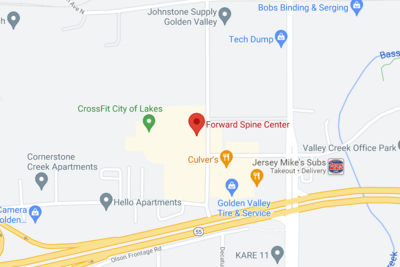
Forward Spine Center, 701 Decatur Ave N, Ste 102, Golden Valley, MN, sees patients from St. Louis Park, Plymouth, Minneapolis, New Hope, Robbinsdale and Crystal. Book online or call 763-332-2680.
Keep reading
- Headache and migraine care in Golden Valley
- Neck pain care in Golden Valley
- Migraine, cluster and tension headaches explained
- Craniosacral technique
These are just three tips and insights for managing cervical headaches. If you have any questions, feel free to reach out. Thank you for allowing me to be part of your health.
Dr. Madeline Klesk, DC, Forward Spine Center, Golden Valley, MN. Originally published February 29, 2024; updated . This article is educational and is not a substitute for an in-person evaluation.

Dr. Madeline Klesk
Contact Me