What Is Hypermobility?
Hypermobility syndrome simply means your joints move beyond the typical range of motion. In other words, your body has a little extra mobility.
For some people, that added flexibility is no big deal. But for others, it can lead to:
If that sounds familiar, it may be worth taking a closer look.
How Do Clinicians Screen for Hypermobility?
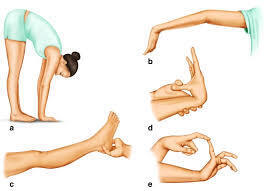
One common screening tool is the Beighton score (sometimes misheard as the “baton” score).
This quick assessment looks at how certain joints move, including:
-
Your fingers
-
Your elbows
-
Your knees
-
Your spine
Each movement is checked to see whether it goes beyond the expected range. The total score helps determine whether generalized hypermobility may be present.
The Most Important Takeaway
If you are hypermobile, the solution is not stretching more.
In fact, the key to feeling better is:
Building strength
Improving stability
Training joint control
The goal is to help your joints feel more supported, controlled, and confident — not looser.
If you’ve always prided yourself on being flexible but struggle with nagging aches or instability, this might be the missing piece.
Want to see what this looks like in real time?
Check out the video above where Austin walks through each part of the Beighton score test step by step so you can follow along.