Quick answer: Most herniated discs get better without surgery. The American Association of Neurological Surgeons says sciatica and arm symptoms from a disc improve with time in about 9 out of 10 people. That is why conservative care is usually the first step. Near Minneapolis, Forward Spine Center in Golden Valley treats herniated and bulging discs in the neck and lower back without medication, injections or surgery, using mechanical traction, gentle flexion-extension adjustments, soft-tissue work and stabilizing exercise. If your exam points to a problem that needs imaging or a surgeon, we will tell you.
What is a herniated disc?
Your spinal discs are the shock absorbers between the vertebrae. Over time they can wear down. A bulging disc is an early sign of that wear, where the disc pouches outward a little. A herniated disc is a later stage, where material from inside the disc pushes out and can press on a nearby nerve.
Where you feel it depends on which disc is involved:
- Lower back (lumbar) disc: pain, numbness or tingling into the buttock and leg, often called sciatica.
- Neck (cervical) disc: numbness, tingling, burning, pain or weakness down the arm and into the hand. Dr. Tim explains this in What is causing the symptoms into my arm?
A herniated disc can feel a lot like spinal stenosis, a narrowing of the canal where the nerve exits the spine that is more common after age 50. The treatment, management and home care for the two are quite different, so telling them apart is the first job of any exam.
Do most herniated discs heal without surgery?
Usually, yes. According to the American Association of Neurological Surgeons, symptoms improve in approximately 9 out of 10 people with time, and the time to improve ranges from a few days to a few weeks. The AANS lists therapy such as traction, gentle massage, and ice and heat among the nonsurgical options, and says surgery may be recommended when conservative treatment does not help, when weakness or numbness keeps getting worse, or when bowel or bladder control is affected.
Chiropractor, physical therapist, pain clinic or surgeon: who does what?
People searching for herniated disc care near Minneapolis find four kinds of providers. Each has a different role:
- Chiropractor (DC): conservative, hands-on care without medication. At Forward Spine Center that means traction to decompress the spine, gentle flexion-extension adjustments, soft-tissue release, exercise and home-care advice. No referral is needed to book.
- Physical therapist (PT): exercise-based rehab, movement training and strengthening. Chiropractic and PT overlap on the exercise side, and many people do well with either.
- Pain management physician: medications and spinal injections, such as epidural steroid injections, when pain needs to be calmed down quickly.
- Spine surgeon: for discs that do not improve with conservative care, or when there is worsening weakness or loss of bowel or bladder control.
These are not competing choices. The usual path is conservative care first, with a clear plan to step up if you are not improving.
How Forward Spine Center treats herniated discs in Golden Valley
Dr. Timothy Klesk, DC completed the University of Pittsburgh Primary Spine Practitioner program, which emphasizes front-line diagnosis, management and care coordination for people with spine problems. His focus is helping patients reach their goals without medication or surgery. A typical disc plan:
- Find the pain generator. Dr. Tim breaks spine pain into four structures that can cause symptoms: the joints, the discs, the nerve roots and the muscles. Testing each one tells us whether a disc is really driving your pain, and rules out stenosis.
- Take pressure off the disc. Mechanical traction to decompress the spine, and flexion-extension adjustments, a gentle, movement-based adjustment that lengthens the spine and creates space between the vertebrae.
- Calm the guarding muscles. Active Release Technique for the muscles that tighten around an irritated disc. Acupuncture with Dr. Madeline Klesk, DC can be combined in the same visit.
- Stabilize and strengthen. One-on-one mobility training and exercises to support your spine, progressed as you improve, so you are not dependent on visits.
- Protect your mornings. Discs absorb fluid overnight, so an irritated disc is often worst first thing, and early morning is a common time for disc injuries. Ease into movement and avoid bending, twisting or lifting right after you get up. More in Spinal discs go out drinking at night.
See the full herniated and bulging disc care page for what a first visit includes.
When should you see a medical doctor or go to the ER?
Call 911 or go to the emergency room if you lose control of your bladder or bowels, or have numbness in the groin or inner thighs. Get medical care promptly if arm or leg weakness is getting worse, or if symptoms started after a major fall or accident. If your exam at our office suggests you need imaging, a medical evaluation or a surgical opinion, we will tell you.
Does insurance cover chiropractic care for a herniated disc?
Most health insurance plans cover chiropractic care, and Forward Spine Center is in network with most major plans. We also accept Medicare, most Medicaid plans, workers' compensation and personal injury claims, and HSA and FSA cards. If you don't have insurance, ask for a Good Faith Estimate before your visit. Questions about your plan? Call 763-332-2680.
Frequently asked questions
Can a herniated disc heal without surgery?
In most cases, yes. The American Association of Neurological Surgeons reports that symptoms improve in about 9 out of 10 people with time, usually over days to weeks. Surgery is generally considered when conservative care does not help or when nerve symptoms keep getting worse.
Is a chiropractor or physical therapist better for a herniated disc?
Both are conservative, non-surgical options, and they overlap on exercise and rehab. A chiropractor adds hands-on care such as traction and gentle adjustments. The right fit depends on your exam and your preference. What matters most is a clear plan and a defined point to reassess.
Is it safe to see a chiropractor for a herniated disc?
At Forward Spine Center, disc care starts with an exam to confirm what is causing your symptoms and to check for warning signs. Techniques for discs are gentle, such as flexion-extension adjustments and mechanical traction. If anything in your exam suggests you need medical care, imaging or a surgical opinion instead, we will tell you.
Do I need an MRI before seeing a chiropractor for a disc?
No. You don't need imaging or a referral to book. If your exam suggests imaging is needed, we will tell you.
Who treats herniated discs without surgery near Minneapolis?
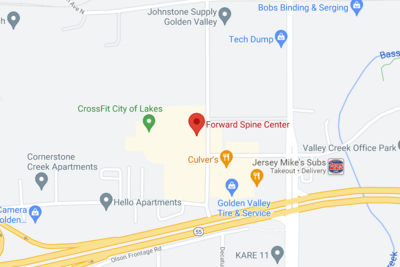
Dr. Timothy Klesk, DC and Dr. Madeline Klesk, DC at Forward Spine Center, 701 Decatur Ave N, Ste 102, Golden Valley, MN 55427, treat herniated and bulging discs without medication, injections or surgery. The clinic serves Golden Valley, Minneapolis, St. Louis Park, New Hope, Plymouth, Robbinsdale, Crystal and Wayzata. Book online or call 763-332-2680.
Keep reading
- Herniated and bulging disc care in Golden Valley
- Sciatica care in Golden Valley
- Low back pain care in Golden Valley
- Neck pain care in Golden Valley
- Gentle flexion-extension techniques for sciatica
Written by Dr. Timothy Klesk, DC, Forward Spine Center, Golden Valley, MN. Published . This article is educational and is not a substitute for an in-person evaluation.
Dr. Tim Klesk
Contact Me